Description
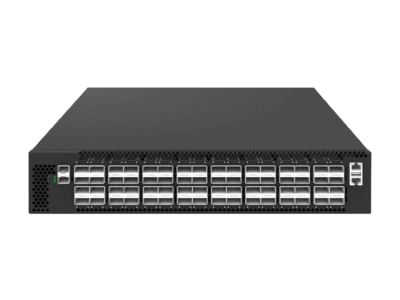
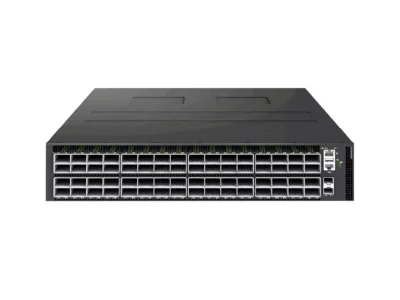
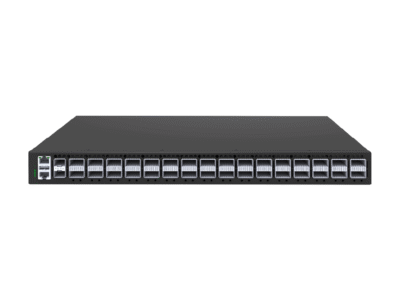
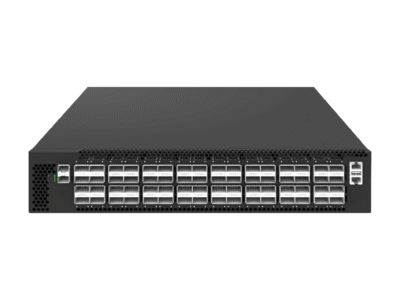
32-Port 100G Network Switch Low Latency SONIC Ready
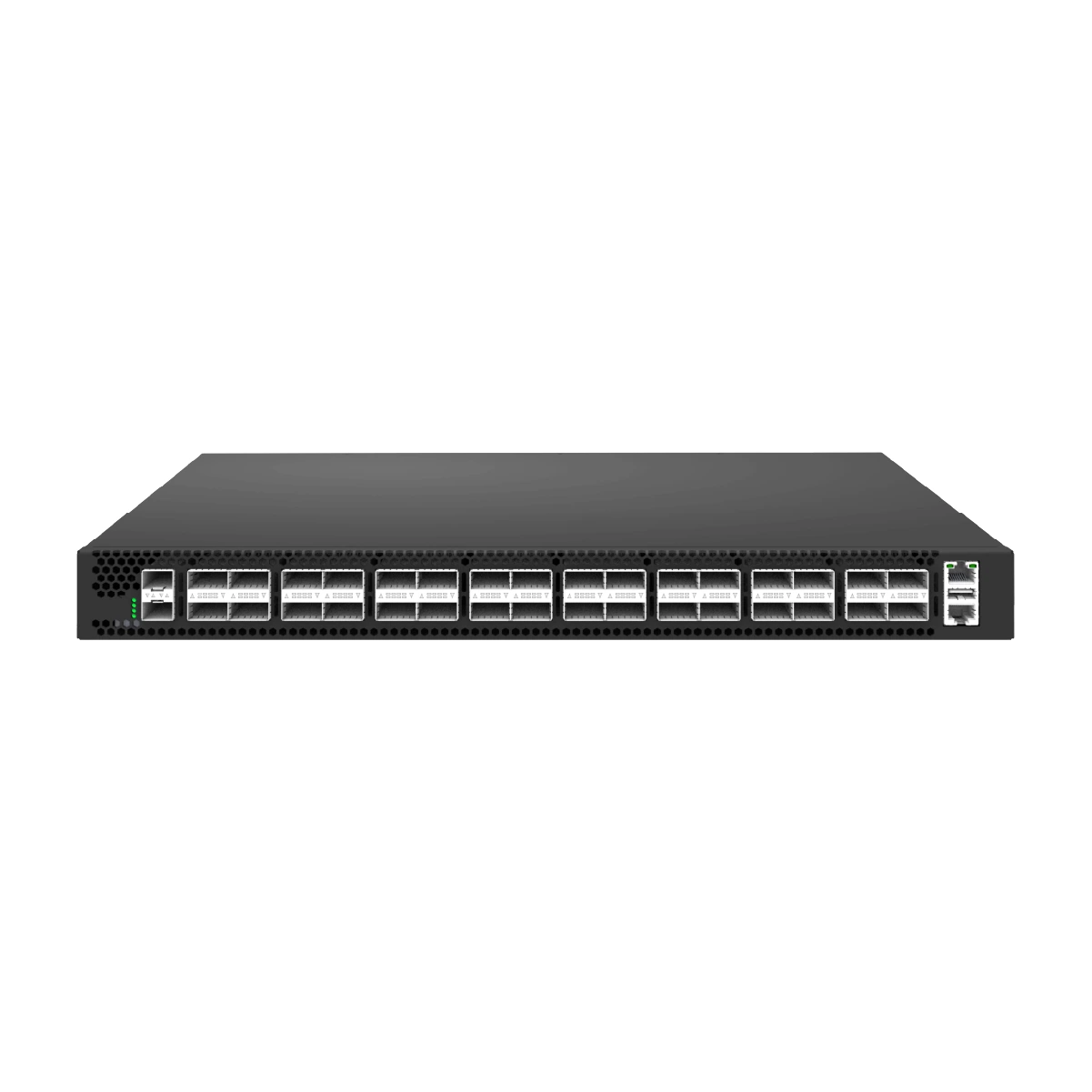
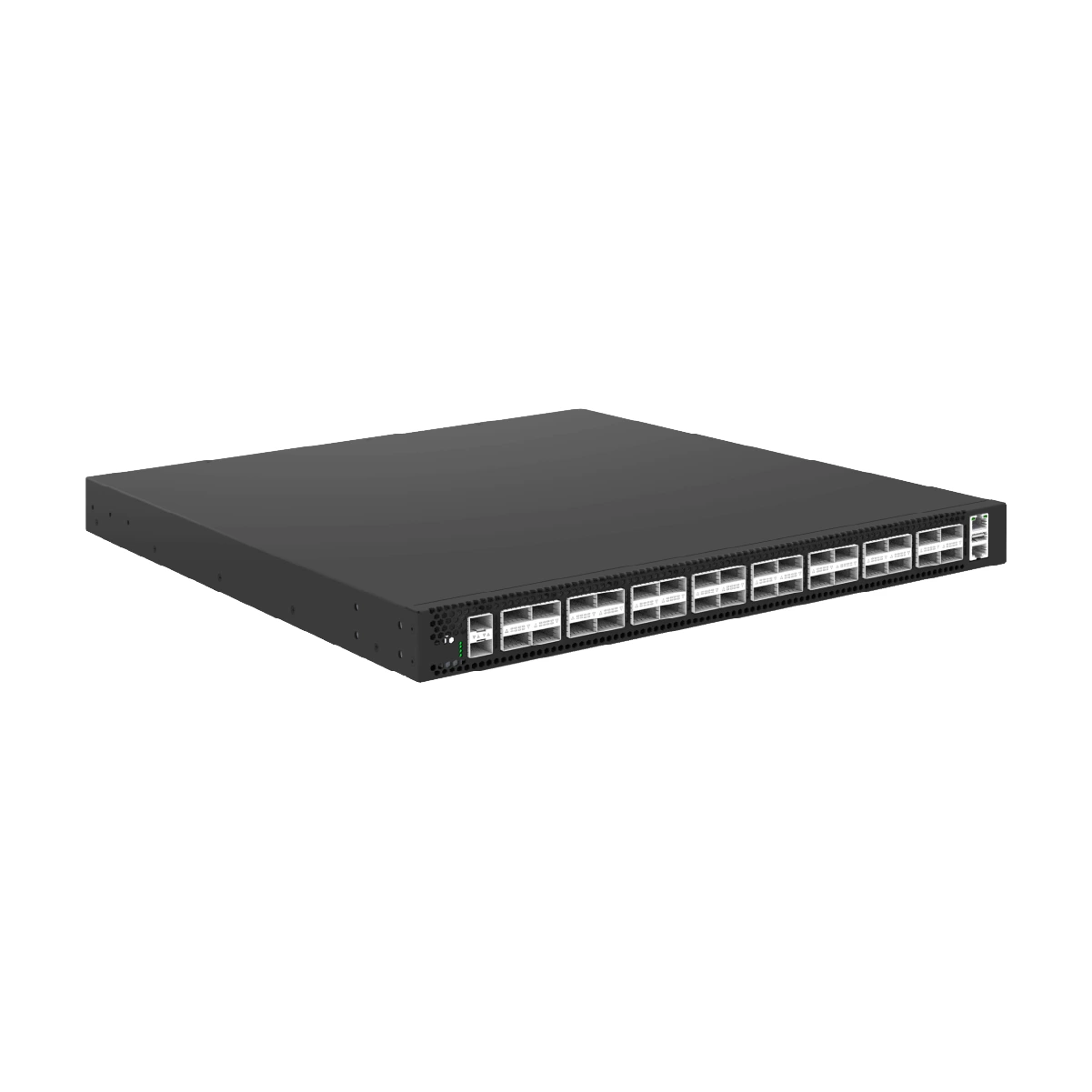
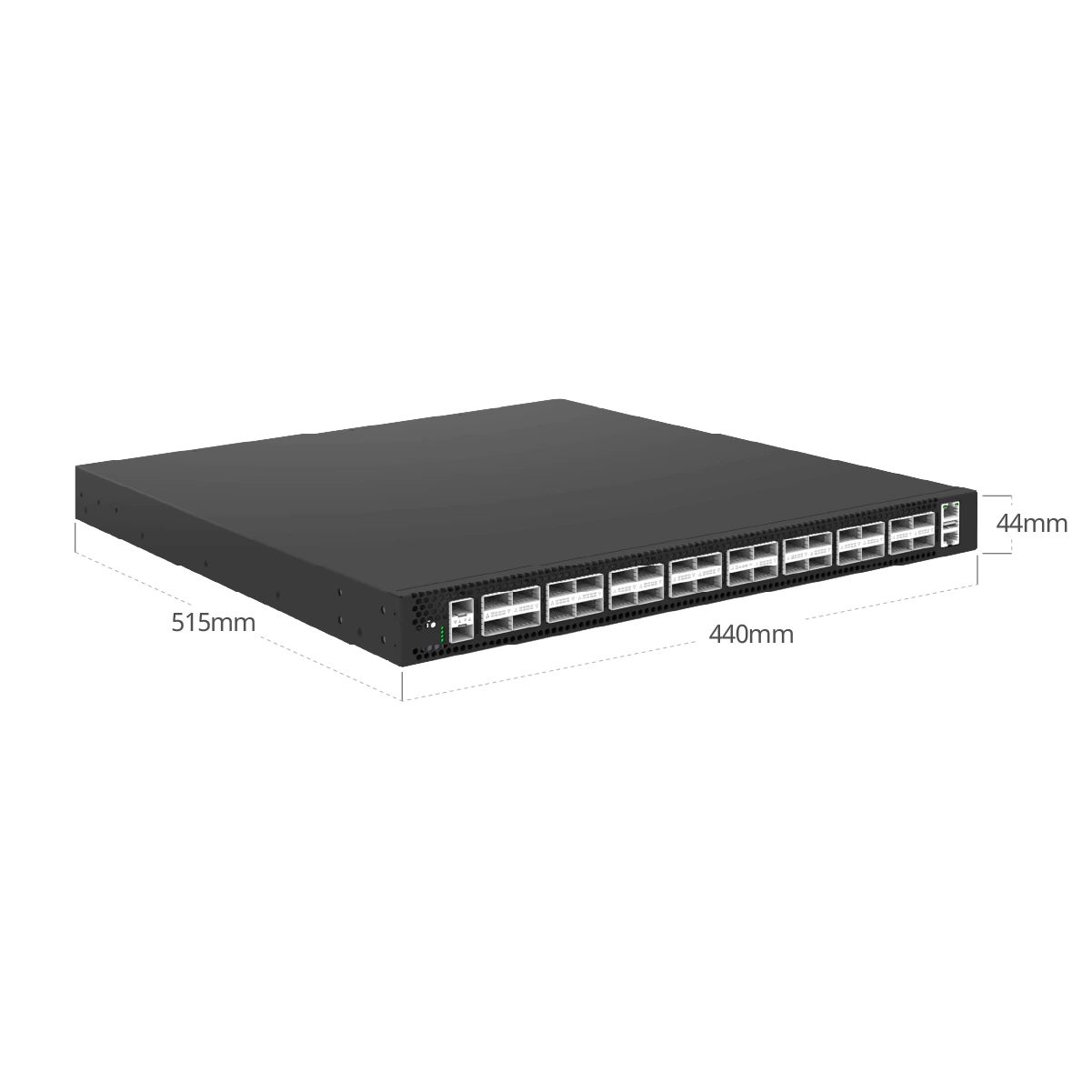
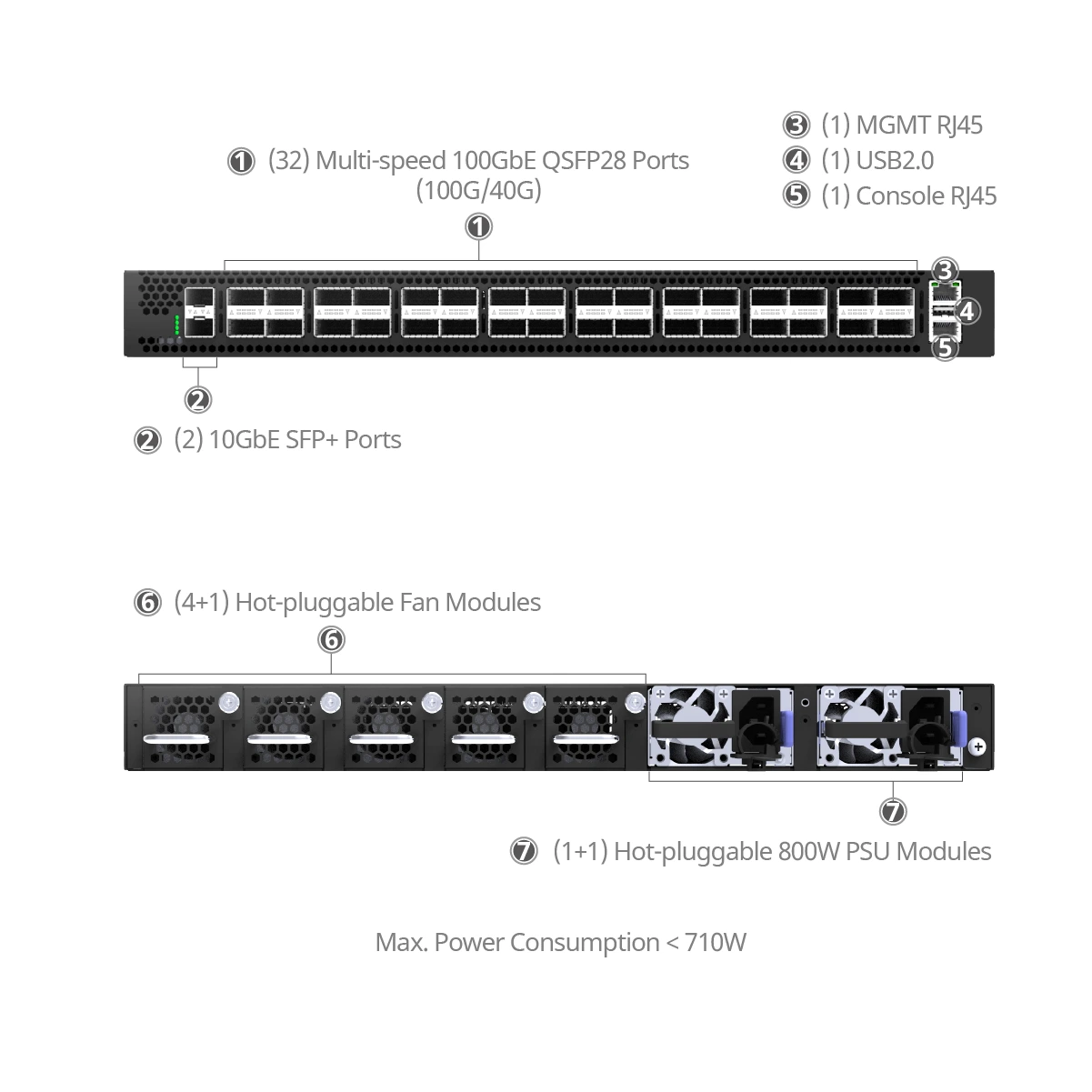
The 532P-N 32-port 100 Gigabit Ethernet (100GbE) network switch is based on a powerful Marvell Teralynx chip designed for environments demanding massive bandwidth and low latency. These 100 gig switches feature 32 QSFP28 ports, each of which supports 100 Gbps data transfer rates. There is low latency on the 32-port 100G switch, switching speeds of up to 3.2 Tbps for L2/L3. The Enterprise SONiC NOS is already installed on this switch, which allows ROCEv2 and EVPN Multi-homing. It supports 40GbE QSFP+ and 100GbE QSFP28 connections. This high port density in a compact 1U form factor makes them ideal for top-of-rack (ToR) or spine-leaf architectures in modern data centers and high-performance computing environments.
Key characteristics of a 32-port 100G switch include:
- High Throughput: With 32 x 100GbE ports, these switches offer a total switching capacity of 3.2 Tbps, enabling the smooth flow of massive amounts of data.
- Low Latency: Designed for high-speed communication, 100G switches minimize data transmission delays, crucial for latency-sensitive applications.
- Flexibility: QSFP28 ports can often be configured as 4x25GbE or 2x50GbE using breakout cables, providing flexibility in connecting to servers and other network devices with different interface speeds.
- Redundancy: Many models come equipped with redundant, hot-swappable power supplies and fans to ensure high availability and minimize downtime.
- Advanced Features: These switches often support advanced Layer 2 and Layer 3 features, including VLANs, link aggregation (LAG), routing protocols (BGP, OSPF), quality of service (QoS), and network virtualization technologies like VXLAN.
- Open Network Options: Some 32-port 100G switches are offered as bare metal or open network switches, allowing users to install their preferred network operating system (NOS), such as SONiC, providing greater customization and control.
Comparison Tables
Comparison by Speed and Port Density:
Comparison by Features:
Use Case Scenarios
- High-Density Data Center Top-of-Rack (ToR)
- Data Center Spine Switch
- High-Performance Computing (HPC) Clusters
- Cloud Service Providers
- Big Data Analytics
- Content Delivery Networks (CDNs)
- Financial Trading Platforms

Reviews
There are no reviews yet.